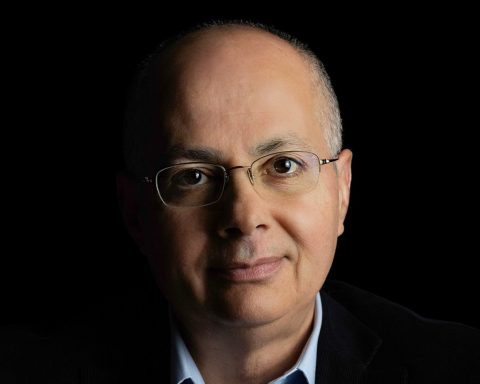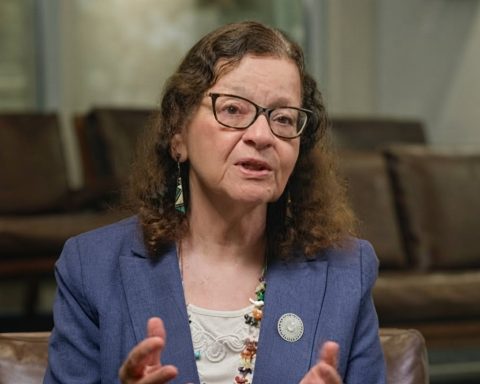



Mary Lou Jepsen has spent decades turning seemingly impossible ideas in optics, displays and computing into technologies that can be manufactured and used at scale. From helping architect the $100 laptop to founding Openwater and pursuing a new generation of medical imaging technology, her career demonstrates how deep technical expertise can become a platform for entirely new categories of innovation.
Key Takeaways
- Mary Lou Jepsen combines physics, engineering, design and entrepreneurship to tackle problems that require more than conventional product development.
- Her work on One Laptop per Child demonstrated how radical hardware redesign can expand access to technology in environments with significant cost, power and infrastructure constraints.
- Pixel Qi showed her ability to translate advanced display research into commercially manufactured technology with major improvements in power efficiency and outdoor readability.
- Openwater represents her most ambitious attempt yet to rethink medical imaging, using optics and computational technologies to pursue smaller and more accessible systems.
- Jepsen’s career demonstrates that deep-tech innovation often begins by questioning the assumptions behind an existing technology, rather than simply improving the current product.
The Innovation Mindset Behind Mary Lou Jepsen
Innovation is often described as the process of creating something new. Mary Lou Jepsen suggests a more demanding definition: rethink the underlying architecture until something that once seemed impractical becomes possible.
Her background sits at an unusual intersection of electrical engineering, optical physics, computer science and art. She earned a bachelor’s degree in electrical engineering and an art degree from Brown University, followed by a master’s degree in holography from MIT and a Ph.D. in optical sciences from Brown.
That combination has shaped the way she approaches technology. Rather than treating displays, computers or medical devices as isolated products, Jepsen has repeatedly focused on the fundamental physical and engineering constraints that determine what a product can ultimately become.
Her career has consequently moved across academia, startups and some of the world’s most ambitious technology companies, including Intel, Google, Facebook and Oculus.
Building the $100 Laptop
One of Jepsen’s most consequential projects came through One Laptop per Child (OLPC).
She joined the initiative in 2005 as its first employee, becoming its chief technology officer and chief architect. Working with Nicholas Negroponte and a large network of manufacturers and engineers, she helped develop the XO laptop, designed specifically to make computing accessible to children in developing countries.
The challenge was not simply to build a cheaper laptop.
The machine had to work in environments where conventional assumptions about computing infrastructure did not necessarily apply. It needed extremely low power consumption, durability, connectivity and a screen that could remain usable outdoors.
Jepsen’s display work became particularly important. The XO incorporated a sunlight-readable display, while its architecture also emphasized low power consumption and mesh networking. Her own account of the project describes an unusually integrated approach in which the display, motherboard, power system, networking and manufacturing strategy were designed as part of one system.
Millions of units were ultimately shipped, giving the project an influence far beyond the individual laptop. OLPC helped demonstrate that radically different assumptions about hardware cost, power consumption and accessibility could be commercially and technically viable at scale.
The broader lesson was significant: constraints can become a source of innovation when engineers are willing to redesign the entire system rather than optimize one component.
Turning Display Research Into a Business
Jepsen subsequently founded Pixel Qi, a company designed to commercialize display technologies developed through her earlier work.
Pixel Qi focused on hybrid and transflective displays capable of delivering color and video while offering dramatically lower power consumption and improved readability in bright sunlight. According to Jepsen’s professional biography, the company’s technology shipped in several million devices and achieved more than 10-times lower power consumption in certain applications.
The significance of Pixel Qi was not simply another display technology.
It demonstrated Jepsen’s ability to move an idea from research into manufacturing. She has repeatedly emphasized this transition throughout her career: breakthrough hardware only matters if it can be produced reliably, integrated into products and delivered to users.
That philosophy has become one of the defining characteristics of her work.
From Google to Oculus
Jepsen’s expertise eventually brought her into some of the world’s most advanced technology organizations.
At Google, she served in senior engineering roles from 2012 to 2015, leading display and hardware efforts across the company and working on projects associated with Google Glass and Google X. Her responsibilities extended beyond research into engineering, product strategy, manufacturing, supply chains and partnerships.
She later became Executive Director of Engineering and Head of Display Technologies at Facebook and Oculus.
The work placed her at the intersection of optics, displays and immersive computing at a moment when virtual and augmented reality were beginning to transition from experimental technology toward consumer products.
This progression is important because it reveals a consistent thread in Jepsen’s career.
She has repeatedly worked on technologies before their markets were fully established.
Holographic displays, ultra-low-power screens, affordable educational computers, wearable computing and immersive displays all required technological development before mass-market applications could become obvious.
Openwater: Rethinking Medical Imaging
Jepsen’s most ambitious innovation may be the one she is pursuing through Openwater.
Founded in 2016, Openwater is developing imaging and therapeutic technologies based on optics, infrared light, computational imaging and other physical techniques. Its long-term ambition is to make sophisticated medical imaging substantially smaller, less expensive and more accessible than conventional hospital-scale systems.
The basic idea is extraordinarily ambitious: use advanced optics and computation to create imaging capabilities in compact, potentially wearable systems.
Traditional medical imaging equipment can be enormous, expensive and difficult to deploy. Openwater’s approach attempts to rethink that architecture by combining advances in photonics, sensors, computation and manufacturing.
The potential applications are equally broad.
Better and more accessible imaging could have implications for detecting and monitoring conditions involving the brain, cardiovascular system and other parts of the body. Openwater has also explored therapeutic applications and brain-computer interfaces.
Jepsen’s approach is particularly characteristic of her earlier work. Rather than asking how to make an existing MRI machine incrementally better, the underlying question is closer to:
What if the functionality could be redesigned from the ground up using the technologies of consumer electronics?
That is the kind of question that has defined her career.
When Personal Experience Shapes Technological Ambition
Jepsen’s interest in medical technology also has a deeply personal dimension.
She has publicly discussed experiencing a serious pituitary tumor earlier in life, an experience that exposed her firsthand to the limitations and burdens associated with medical diagnosis and treatment.
That experience helped reinforce her interest in developing technologies that could make medical information easier to obtain and potentially enable earlier or more accessible intervention.
It is a useful reminder that technological innovation does not always begin with a market opportunity. Sometimes it begins with an engineer encountering a problem personally and asking why the available technology has to work the way it currently does.
Innovation at the Intersection of Physics and Manufacturing
Perhaps the most impressive aspect of Jepsen’s career is the range of disciplines she has connected.
- Optical physics
- Holography
- Display engineering
- Computational imaging
- Consumer electronics
- Virtual and augmented reality
- Medical technology
- Manufacturing
- Human-computer interaction
She has also accumulated more than 250 published or issued patents according to her professional biography.
But patents alone do not explain her influence.
Her distinctive contribution has been combining fundamental science with the practical realities of manufacturing. A laboratory prototype is one thing. A technology that can be manufactured by the millions, survive real-world conditions and reach people who need it is another.
Her experience with OLPC illustrates this particularly well. The XO laptop was not merely an exercise in minimizing component costs. It required an entirely different system architecture, supply-chain strategy and approach to energy consumption and display technology.
That ability to move between physics, engineering and commercialization is what makes Jepsen particularly relevant to today’s deep-tech economy.
The Bigger Lesson for Innovators
Mary Lou Jepsen’s career offers a different model of innovation from the conventional startup narrative.
She has not simply identified a market and built a product around it. Instead, she has repeatedly started with a difficult technical problem and explored what becomes possible when fundamental constraints are challenged.
The result has been a portfolio of innovations that span education, computing, displays, immersive technology and medicine.
For entrepreneurs, there is an important lesson here: the biggest opportunities may exist inside problems that initially appear too technically difficult, too expensive or too far ahead of the market.
The challenge is determining which constraints are genuinely fundamental and which exist only because nobody has yet redesigned the system.
Jepsen’s career has been built around that distinction.
Looking Ahead
Openwater represents the latest chapter in that philosophy.
If Jepsen and her collaborators can successfully translate advanced optical and computational imaging research into practical medical systems, the implications could extend well beyond one company. Smaller, more accessible imaging technologies could eventually change how diagnosis, monitoring and even certain forms of treatment are delivered.
That outcome is far from guaranteed, particularly given the technical, clinical and regulatory hurdles involved in medical devices. But the ambition is consistent with the trajectory of Jepsen’s career.
From the $100 laptop to low-power displays and immersive computing, she has repeatedly pursued technologies that challenge assumptions about what hardware should cost, how large it needs to be and who should have access to it.
Mary Lou Jepsen’s innovation story is ultimately about changing the architecture of possibility.
FAQs
Who is Mary Lou Jepsen?
Mary Lou Jepsen is an American technologist, inventor and entrepreneur specializing in optics, displays, computational imaging and medical technology. She has held senior engineering roles at Intel, Google, Facebook and Oculus and has founded several technology ventures.
What did Mary Lou Jepsen do at One Laptop per Child?
Jepsen was a co-founder, CTO and chief architect of One Laptop per Child. She helped architect the XO laptop, including its display, power management and networking technologies, with the goal of bringing affordable computing to children in developing countries.
What is Openwater?
Openwater is a technology company founded by Jepsen that is developing advanced medical imaging and therapeutic technologies. Its approach combines optics, computational imaging and other technologies in an effort to make sophisticated medical capabilities smaller and more accessible.
Why is Mary Lou Jepsen considered an important display innovator?
Jepsen has worked on multiple generations of display technology, from early microdisplays and holography to the low-power screens developed for OLPC and Pixel Qi and advanced display systems at Google and Oculus. Her career has connected fundamental optical research with large-scale manufacturing.
What can entrepreneurs learn from Mary Lou Jepsen?
Her career demonstrates the value of combining deep technical knowledge with commercial execution. It also shows that some of the most important innovations emerge when entrepreneurs question the fundamental architecture of an existing technology rather than simply making incremental improvements.
Sources:
- https://www.optica.org/History/Biographies/bios/Mary_Lou_Jepsen
- https://cdss.berkeley.edu/mary-lou-jepsen
- https://www.ted.com/speakers/mary_lou_jepsen
- https://computerhistory.org/profile/mary-lou-jepsen/
- https://en.wikipedia.org/wiki/Mary_Lou_Jepsen
- https://cdss.berkeley.edu/mary-lou-jepsen
Photo credit: Mary Lou Jepsen / Wikimedia Commons / CC BY-SA 4.0 – edited (link)