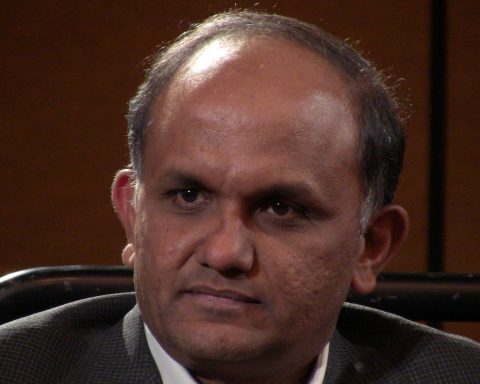


Football clubs are often measured by what happens on the pitch, but sustainable sports organizations are built through decisions that happen far beyond match day. At Como 1907, Mirwan Suwarso has helped lead a transformation that has taken the club from Serie D to the Champions League while attempting to build a broader business around football, tourism, entertainment and community.
His story offers an unusual leadership lesson. Rather than treating a football club simply as a team that needs better players, Suwarso has approached Como as an organization that needs an identity, an operating system and multiple sources of long-term value.
Key Takeaways
- Mirwan Suwarso has helped lead Como 1907 from Serie D to Serie A and the Champions League while representing the Indonesian ownership group.
- His approach emphasizes organizational systems, collaboration and specialist expertise rather than concentrating every decision around one leader.
- Como’s location beside Lake Como has become part of a broader strategy involving tourism, hospitality, entertainment and commercial experiences.
- The club’s rapid growth demonstrates why sporting success and financial sustainability are separate leadership challenges.
- Suwarso’s story shows how leaders can turn a narrowly defined opportunity into a broader business platform without losing sight of the underlying community.
Seeing an Opportunity Where Others Saw a Struggling Club
When the Indonesian-backed ownership group acquired Como 1907 in 2019, the club was playing in Serie D after years of financial and organizational difficulties. The original idea was reportedly much smaller than what followed: the club could provide a setting for television and documentary projects aimed at Indonesian audiences.
That plan changed as the football project became more ambitious.
Como progressed through the Italian football pyramid, eventually returning to Serie A in 2024 after a 21-year absence. By 2026, the club had gone further still, reaching the Champions League for the first time in its history.
Como’s official history describes the 2019 acquisition by the Djarum Group as the starting point of the club’s revitalization, while Suwarso has explained that the original entertainment concept evolved as the scale and potential of the football operation became clearer.
The leadership lesson is broader than football. Sometimes an opportunity reveals its real potential only after an organization begins operating it.
Good leaders need a plan, but they also need enough flexibility to recognize when the reality in front of them is more valuable than the original plan.
Build a System Instead of Relying on One Star
Modern football can encourage an unhealthy focus on individual personalities. A famous player attracts attention, a famous coach generates headlines and a wealthy owner can dominate the narrative.
Mirwan Suwarso approaches those issues by increasingly emphasizing on organizational structure instead.
He has described a broader football decision-making group involving head coach Cesc Fàbregas, sporting leadership, the chief financial officer and ownership representation. Rather than allowing every major decision to depend on a single executive, the organization seeks to make decisions collectively around an identity that has been developed inside the club.
Como has also publicly emphasized collaboration across recruitment, player development, performance, strategy and the first team.
This is an important leadership principle because organizations become fragile when too much knowledge sits inside one person’s head.
A strong leader should not simply make good decisions. The leader should help create a system in which good decisions can continue to be made by other people.
Give Experts Room to Do Their Jobs
One of Suwarso’s more interesting leadership characteristics is what he says he does not do.
He has repeatedly presented himself as a manager rather than a football tactician. The technical decisions belong to the sporting structure and coaching staff, while his role is to help establish the environment in which those people can perform.
That distinction is particularly important in a sport where owners and executives can be tempted to interfere with tactical decisions.
Leadership does not require knowing every detail better than the specialists. It requires knowing where your responsibility begins and where someone else’s expertise should take over.
For business leaders, the equivalent is resisting the temptation to become the company’s best salesperson, product designer, engineer, accountant and operations manager simultaneously.
Delegation works when leaders remain accountable for the system without trying to perform every specialist function themselves.
Turn Location Into an Asset
Como has something that cannot easily be copied by another football club: its location.
The club plays at the Giuseppe Sinigaglia Stadium beside Lake Como, one of Italy’s most recognizable destinations. Suwarso has talked about football as part of a larger visitor experience rather than treating a match as an isolated ninety-minute event.
That thinking has increasingly extended into sports tourism. The club’s broader ecosystem now includes initiatives connecting football with hospitality, travel, events and the wider appeal of Lake Como.
The idea is strategically important because location can become more than a backdrop.
For a business, a unique physical environment can become part of the product itself. A restaurant can sell an experience rather than only a meal. A hotel can sell access to a destination rather than only a room. A sports club can sell a connection to a place rather than only a ticket.
Como’s leadership challenge is to convert that natural advantage into sustainable commercial value without reducing the identity of the club to a tourism marketing exercise.
Think About Revenue Beyond Match Day
A football club’s traditional financial model is relatively straightforward: tickets, broadcasting, sponsorship, merchandising and player transactions.
Suwarso has pursued a broader vision.
The Como project has been associated with media, entertainment, tourism, merchandising, hospitality and services that can potentially be offered beyond the club itself. Como’s current structure describes a broader ecosystem spanning sports, retail, hospitality, media and tourism, including affiliated companies operating under a multi-club servicing model.
This approach reflects a basic business principle: valuable assets can sometimes support several complementary revenue streams.
In Como’s case, the football club creates attention. The location creates tourism potential. The organization develops sporting expertise. Media and commercial capabilities can then build around those assets.
The opportunity is obvious, but so is the challenge. Each additional business requires investment, management attention and proof that customers are actually willing to pay for it.
Diversification is only useful when the new businesses strengthen the core rather than distract from it.
Growth Does Not Automatically Mean Sustainability
The rapid rise of Como also provides a necessary counterweight to the success story.
Promotion, international visibility and Champions League qualification have required significant investment. Reporting in 2026 showed that the wider Como group was still operating with substantial losses as the ownership funded the expansion and built out its sporting and commercial infrastructure.
Suwarso himself has spoken about the goal of making the club self-sustaining and about increasing revenue and player values. That is an important distinction: reaching the top level of football is one objective; building an organization capable of remaining there economically is another.
This is a lesson that applies to almost every growing business.
Rapid expansion can make a company look healthier than it really is because attention focuses on revenue, customers, market share or visibility while the underlying cost structure is still being built.
Growth becomes meaningful when the organization can eventually support its ambitions through recurring economic activity rather than continuous dependence on outside capital.
Build Value in People, Not Only in Results
Como’s sporting strategy has also placed considerable emphasis on player development and player value.
That changes the way the club can think about recruitment. A player is not simply an input required to win the next match. The right player can also develop, appreciate in value and become part of the club’s long-term sporting identity.
The same principle applies in ordinary businesses.
Employees should not be viewed only according to what they can produce today. The strongest organizations create systems in which people can develop capabilities that make the organization more valuable over time.
Investment in people can therefore function as both culture and strategy.
Culture Has to Include the Community
International ambition can create an unusual challenge for a club like Como.
The organization wants to attract global attention while maintaining a meaningful relationship with the people who live around the stadium.
That tension became particularly visible during Como’s first Champions League campaign in 2026. For the club’s historic home debut against RB Leipzig, Suwarso and other directors gave up their seats so older long-time supporters could attend the match.
The gesture was symbolic, but it reflected a larger issue. A football club can expand internationally without treating its original community as an obstacle to growth.
For any business, globalization creates a similar question: how do you become bigger without becoming disconnected from the people who helped give the organization its identity?
Let Ambition Evolve Without Making Premature Promises
One of the more revealing aspects of Suwarso’s public approach is his reluctance to define Como entirely through short-term targets.
After the club’s rapid rise, it would have been easy to make increasingly ambitious promises. Instead, he has often emphasized improvement, organizational development and building something sustainable.
That approach matters because ambitious organizations can become trapped by their own publicity.
A company that announces that it will become the market leader creates one kind of pressure. A company that concentrates on building the capabilities necessary to compete creates another.
The second approach may appear less exciting, but it can give management more freedom to respond when circumstances change.
Leadership Means Managing the Expectations Around You
Football executives operate in an unusually emotional environment. Supporters care deeply about results, refereeing decisions, transfers and individual players, while social media can turn ordinary sporting events into major controversies within minutes.
Suwarso has occasionally taken a direct approach to supporter behavior, including criticizing abuse directed at opponents or officials and reminding fans that the club’s culture should extend beyond the result of a single match.
That creates another leadership lesson: culture is not only what employees do inside an organization.
It is also what the organization is willing to encourage, tolerate or challenge among the communities connected to it.
Leaders cannot control every reaction, but they can establish the standards they want their organization to represent.
The Ownership Question Matters
Understanding Suwarso’s role also requires understanding what he is not.
He is not the principal owner of Como 1907. The club is controlled by the Indonesian Hartono family through the ownership structure associated with SENT Entertainment and the Djarum Group, while Suwarso serves as president and represents the ownership interests in Italy.
That distinction is important because the financial resources behind Como’s transformation are not simply Suwarso’s personal capital.
His leadership contribution is better understood through strategy, organization, representation, commercial development and execution.
That makes his story potentially more useful for business readers because most executives are not founders or controlling shareholders. They have to create results while working within an ownership structure that includes other stakeholders and priorities.
Leadership Lessons From Mirwan Suwarso
1. Let the opportunity evolve
The Como project began with a much narrower entertainment concept before the football opportunity became much larger, demonstrating why leaders should remain open to changing the original plan.
2. Build organizations rather than personalities
Long-term performance becomes less fragile when decisions, expertise and responsibility are distributed across a capable team.
3. Give specialists room to lead
Executives create value not by doing every job themselves but by creating the conditions in which experts can do their jobs effectively.
4. Look for value around the core business
Como’s approach to tourism, media, hospitality and sporting services illustrates how a core asset can support complementary businesses.
5. Do not confuse growth with sustainability
Rapid expansion can require substantial capital, so leaders must eventually demonstrate that the organization can generate enough recurring value to support its ambitions.
6. Protect the original community
International growth becomes more durable when an organization continues to respect the people and place that gave it its identity.
7. Build systems that can outlast individual leaders
A collaborative operating structure creates organizational value that does not depend entirely on one executive’s presence.
Conclusion
Mirwan Suwarso’s leadership story is unusual because it sits at the intersection of football, entertainment, international business and destination marketing.
Como 1907’s rise from Serie D to Serie A and then to the Champions League is the most visible part of the story. The more interesting business story is what happens underneath it: building an organization, developing people and players, creating commercial opportunities around the club, maintaining a connection with the city and attempting to turn rapid sporting growth into a sustainable business.
There are still significant questions. The cost of Como’s rapid expansion is substantial, the club’s broader businesses need to prove their commercial value, and the organization must demonstrate that its ambitions can eventually become economically self-sustaining.
That uncertainty is part of what makes Suwarso’s leadership worth examining.
The lesson is not that every company should imitate Como’s model. It is that leaders should look beyond the obvious product, identify the assets surrounding it, build systems rather than dependencies, and remain flexible enough to recognize when a small opportunity has become something much bigger.
For Como 1907, the football pitch may be where the results are measured. But Suwarso’s larger leadership challenge is building everything around it.
FAQs
Who is Mirwan Suwarso?
Mirwan Suwarso is an Indonesian business executive and the president of Como 1907, the Italian football club controlled by the Hartono family through the ownership structure associated with SENT Entertainment and Djarum. Before his football leadership role, he worked across media, entertainment, advertising and sports broadcasting.
Is Mirwan Suwarso the owner of Como 1907?
No, Suwarso is not the principal owner of Como 1907. He serves as president and represents the interests of the Indonesian ownership group, while the Hartono family provides the capital behind the club’s broader project.
How did Como 1907 rise under the Hartono ownership?
The ownership group acquired Como in 2019 when the club was in Serie D, and the organization subsequently climbed through the Italian football system before returning to Serie A in 2024. By 2026, Como had reached the Champions League for the first time in its history.
What is unusual about Suwarso’s approach to Como?
He has presented Como as more than a football team, with ambitions spanning sport, media, tourism, hospitality and other commercial activities. The broader strategy is designed to create value around the club and its location rather than relying only on match-day and broadcasting revenue.
What can business leaders learn from Mirwan Suwarso?
His experience highlights the importance of recognizing opportunities as they evolve, giving specialists room to perform, building systems rather than relying on individual personalities and looking for complementary revenue streams around a core business. It also demonstrates why rapid growth must eventually be matched by a credible path toward sustainability.
Sources:
- https://id.wikipedia.org/wiki/Mirwan_Suwarso
- https://en.wikipedia.org/wiki/Como_1907
- https://jakartaglobe.id/news/como-1907-owned-by-indonesias-wealthiest-family-promoted-to-serie-a
- https://www.forbes.com/sites/clementelisi/2026/09/01/comos-revolution-is-turning-heads-in-serie-a/
- https://thesoccerbusiness.com/podcast/como-from-serie-d-to-the-champions-league-s-coolest-club-%E2%80%94-with-mirwan-suwarso
- https://www.cbssports.com/soccer/news/como-disney-model-italian-soccer-serie-a/
- https://medium.com/authority-magazine/sports-stars-making-a-social-impact-why-and-how-mirwan-suwarso-of-mola-is-helping-to-change-our-2fed37efece4