

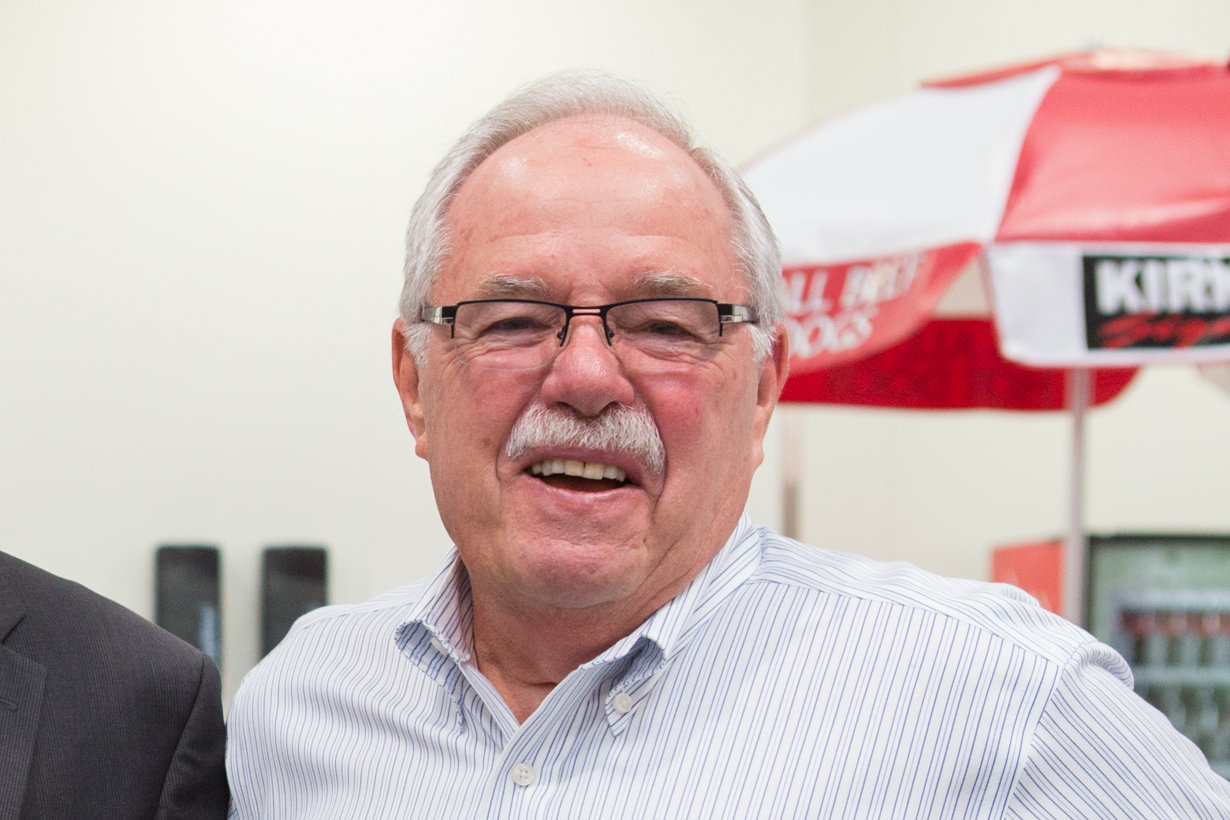
Many business leaders view employee costs as something to minimize, but Jim Sinegal built one of the world’s most successful retailers by treating employees as an investment instead. As co-founder and longtime CEO of Costco, he demonstrated that a company could simultaneously deliver low prices, strong shareholder returns, and generous employee compensation while creating one of the most admired cultures in modern business.
Key Takeaways
- Employees should be viewed as investments, not expenses.
- Customer trust is a long-term competitive advantage.
- Humility helps leaders stay connected to operational reality.
- Strong cultures are built through consistent actions.
- Long-term thinking often outperforms short-term optimization.
- Stakeholder-focused leadership can drive exceptional business results.
What If the Conventional Wisdom Is Wrong?
For decades, many retailers followed a familiar formula.
Keep labor costs low. Minimize benefits. Focus relentlessly on quarterly earnings. Reward shareholders first and worry about employees later.
Jim Sinegal (full name: James D. Sinegal) believed this approach was fundamentally flawed.
Throughout his career, he argued that businesses perform best when they create value for all stakeholders – customers, employees, suppliers, and shareholders. While many executives discussed this philosophy, Sinegal operationalized it.
Costco paid higher wages than many competitors. It offered strong benefits, promoted from within, and maintained low employee turnover in an industry notorious for workforce instability.
Critics often questioned whether such policies were sustainable. The results ultimately answered that question.
Under Sinegal’s leadership, Costco grew from a startup warehouse retailer into a global powerhouse, proving that treating employees well could become a competitive advantage rather than a financial burden.
From Grocery Bagger to Retail Legend
Jim Sinegal’s leadership philosophy was shaped long before Costco existed.
Born in Pittsburgh in 1936 and raised in a working-class family, Sinegal understood the realities faced by ordinary workers. His early experiences instilled an appreciation for hard work, humility, and opportunity.
At age 18, he took a job as a grocery bagger at FedMart, a discount retail chain founded by legendary retailer Sol Price.
That job changed his life.
Price became one of the most influential mentors in Sinegal’s career. Under his guidance, Sinegal learned that successful retailing was not simply about selling products – it was about building trust with customers and employees.
Over nearly three decades, Sinegal worked his way through numerous operational and leadership roles. He learned every aspect of the retail business from the ground up, gaining firsthand insight into the challenges faced by frontline workers.
This experience would later shape his leadership style.
Unlike executives who spend most of their careers in corporate offices, Sinegal never lost touch with store operations. Even as CEO, he remained famous for visiting warehouses regularly, talking directly with employees, and focusing on details that affected customers.
In 1983, together with Jeff Brotman, he co-founded Costco in Seattle. The company would become the ultimate expression of the principles he had spent decades developing.
Insight 1: Employee Satisfaction Drives Customer Satisfaction
One of Sinegal’s most consistent beliefs was remarkably simple:
If employees are treated well, customers will be treated well.
While many companies viewed labor as a cost center, Sinegal viewed employees as one of Costco’s most important assets.
Costco became known for offering wages and benefits significantly above industry averages. Employees often stayed with the company for years or even decades.
The business impact was substantial.
Lower turnover meant lower hiring and training costs. Experienced employees provided better service. Strong morale created more consistent customer experiences. Importantly, these advantages compounded over time.
Competitors frequently focused on cutting labor expenses, only to face challenges related to turnover, staffing shortages, and declining service quality.
Sinegal demonstrated that investing in employees could improve operational performance while strengthening customer loyalty.
The lesson extends far beyond retail. Organizations often underestimate how employee experience shapes customer experience. In many cases, the two are inseparable.
Insight 2: Long-Term Thinking Beats Quarterly Thinking
Wall Street analysts occasionally criticized Costco during Sinegal’s tenure.
Some argued that the company could generate higher profits by raising prices, reducing benefits, or extracting more margin from customers.
Sinegal consistently rejected those suggestions. His focus remained on creating long-term value rather than maximizing short-term earnings.
Perhaps no example better illustrates this philosophy than Costco’s famous $1.50 hot dog and soda combination.
While seemingly insignificant, the product became a symbol of the company’s commitment to customer trust. Rather than constantly adjusting prices to improve margins, Costco prioritized delivering exceptional value.
This mindset extended throughout the organization.
Costco’s membership model depended on customer loyalty and renewal rates. Protecting that trust often mattered more than capturing incremental profits in a given quarter.
The result was a business model built on consistency rather than optimization.
Sinegal understood that trust, once lost, is difficult to regain. By protecting customer value, he strengthened Costco’s long-term competitive position.
Insight 3: Humility Creates Better Leaders
Despite becoming a billionaire and leading one of the world’s largest retailers, Sinegal maintained an unusually humble leadership style.
He famously worked in a modest office, avoided executive perks, traveled without unnecessary extravagance, and more importantly, he remained accessible.
Employees frequently reported seeing Sinegal walking warehouses, asking questions, and engaging directly with frontline teams.
This behavior was not symbolic. It reflected a deeper leadership belief that executives should remain connected to operational reality.
Many organizations struggle because senior leaders become insulated from the people closest to customers.
Sinegal worked actively to prevent that disconnect. His visibility helped create a culture where employees felt respected and where leadership remained grounded in practical realities rather than corporate abstractions.
Humility, in his view, was not weakness. It was a mechanism for learning.
Insight 4: Culture Is Built Through Consistency
Many companies publish values statements. Far fewer consistently align their decisions with those values.
Sinegal understood that culture is not defined by slogans but by repeated actions.
When economic downturns occurred, Costco continued investing in employees. When analysts pushed for higher margins, the company protected customer value. When opportunities arose to pursue short-term gains, leadership remained focused on long-term principles.
Over time, these decisions reinforced trust.
Employees understood what the company stood for. Customers knew what to expect. Investors attracted to the business appreciated its consistency.
This predictability became a strategic advantage. Strong cultures emerge when leaders repeatedly demonstrate that values matter, especially when doing so requires sacrifice.
Sinegal’s leadership offers a powerful example of culture built through behavior rather than messaging.
Leadership Beyond Costco: A Lasting Influence
Sinegal stepped down as CEO in 2011 and transitioned leadership to Craig Jelinek, ensuring continuity in Costco’s culture and operating philosophy.
The succession itself reflected one of his core beliefs: great leaders build institutions that can thrive without them.
Even after retirement from day-to-day leadership, Sinegal remained connected to Costco as a director and advisor for several years. His influence continued to shape decisions throughout the organization.
Today, many of the practices he championed remain central to Costco’s identity.
The company’s strong employee retention, customer loyalty, and disciplined operating model continue to serve as evidence that stakeholder-focused leadership can produce exceptional long-term results.
Business schools frequently study Costco as an example of how culture, operational excellence, and ethical leadership can reinforce one another.
The Power of Playing the Long Game
Jim Sinegal’s career challenges one of the most persistent assumptions in business: that companies must choose between treating employees well and maximizing performance.
Costco’s success suggests otherwise.
Through disciplined execution, long-term thinking, and unwavering commitment to stakeholders, Sinegal built a company that delivered value to customers, employees, and shareholders simultaneously.
His leadership reminds us that sustainable success is rarely created through shortcuts. Instead, it emerges from trust, consistency, and a willingness to prioritize enduring principles over immediate gains.
For leaders navigating today’s increasingly complex business environment, that lesson may be more relevant than ever.
FAQs
Who is Jim Sinegal?
Jim Sinegal is the co-founder and former CEO of Costco Wholesale Corporation. He is widely recognized for building Costco into one of the world’s most successful retailers while championing employee-first leadership principles.
What is Jim Sinegal’s leadership style?
Sinegal’s leadership style emphasizes humility, accessibility, long-term thinking, and respect for employees. He believed that taking care of workers ultimately creates better outcomes for customers and shareholders alike.
Why is Costco known for treating employees well?
Under Sinegal’s leadership, Costco paid higher wages and offered stronger benefits than many competitors. He viewed employee satisfaction as a key driver of productivity, customer service, and long-term business success.
What made Costco different from other retailers?
Costco focused on delivering exceptional value through low prices, a membership-based model, and a highly engaged workforce. The company prioritized customer trust and employee retention over maximizing short-term profits.
What can leaders learn from Jim Sinegal?
Leaders can learn the importance of consistency, stakeholder thinking, and operational humility. His career demonstrates that companies can achieve outstanding performance while maintaining strong values and treating people with respect.
Sources:
- https://hbr.org/2025/09/costcos-jim-sinegal-on-building-a-company-that-will-endure
- https://www.wsj.com/business/retail/how-costcos-co-founder-built-the-400-billion-retailer-behind-kirkland-d25e27c7
- https://newsroom.lmu.edu/campusnews/the-entrepreneurial-journey-of-jim-sinegal-co-founder-and-board-member-of-costco-wholesale-corporation/
- https://www.celebritynetworth.com/richest-businessmen/ceos/jim-sinegal-net-worth/
- https://www.forbes.com/sites/peterjreilly/2012/12/02/is-costcos-jim-senegal-a-hypocrite/
- https://www.seattletimes.com/business/complete-qa-with-costco-founder-ceo-jim-sinegal/
- https://www.reuters.com/article/world/costco-ceos-legacy-continues-as-he-steps-down-idUSTRE7805VW/
Photo credit: CC0