

Breast cancer screening has traditionally relied on imaging technologies, including mammography, to identify abnormalities that may require further investigation. While these methods remain important in healthcare, researchers and entrepreneurs continue exploring alternative approaches that could complement existing screening methods, particularly for women who face accessibility, comfort, or diagnostic limitations.
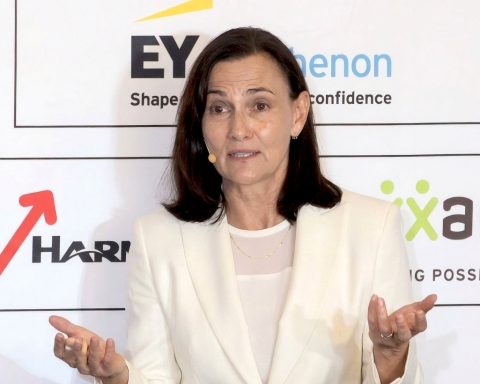
Judit Giró Benet, a biomedical engineer and founder of The Blue Box, is developing a technology that could introduce a different approach to breast cancer detection by analyzing urine samples using chemical sensors and artificial intelligence.
Key Takeaways
- Judit Giró Benet is a biomedical engineer and entrepreneur developing The Blue Box, a urine-based technology designed to detect breast cancer through chemical analysis and artificial intelligence.
- Her innovation uses an electronic nose and AI to identify patterns in volatile organic compounds present in urine samples.
- The Blue Box was inspired by research into how dogs can detect certain diseases through their sense of smell, leading Benet to explore whether sensors could replicate aspects of that biological capability.
- The company has conducted pilot studies and published scientific research, but the technology remains under development and has not yet been approved as a medical screening device.
- Benet’s work highlights how medical innovation can combine engineering, artificial intelligence, biomarker research, and patient-centered design to explore alternative approaches to healthcare.
From Biomedical Engineering to Entrepreneurship
Judit Giró Benet studied biomedical engineering at the University of Barcelona, where her interest in combining engineering with healthcare began to take shape. Her academic work eventually led her toward embedded systems, artificial intelligence, medical technology, and the development of devices capable of translating biological information into useful diagnostic data.
During her studies, Benet became interested in research involving dogs that could detect certain diseases through their sense of smell. The idea raised an intriguing engineering question: if biological organisms can identify patterns associated with disease through chemical signals, could sensors and computational systems replicate some of that capability?
This question became the foundation of her work on The Blue Box.
Benet subsequently pursued graduate studies at the University of California, Irvine, where she continued developing the concept. Her work combined biomedical engineering, sensor technology, data analysis, and machine learning, disciplines that would eventually form the basis of her entrepreneurial venture.
Rather than pursuing a conventional career within an established medical technology company, Benet began developing a solution of her own. In 2020, she received the international James Dyson Award for The Blue Box, bringing early recognition to her idea and helping attract attention to the project.
The award represented an important milestone for a young engineer whose concept was still in development. It also demonstrated how innovation competitions can help emerging entrepreneurs communicate technically ambitious ideas, attract support, and move from academic research toward commercialization.
The Innovation: Detecting Breast Cancer Through Urine
The Blue Box and the Electronic Nose
The Blue Box is designed to detect breast cancer by analyzing volatile organic compounds, commonly known as VOCs, in urine samples.
VOCs are chemical compounds that can evaporate under certain conditions. Research has explored whether changes in the chemical composition of bodily fluids may provide information associated with certain diseases. These chemical patterns may potentially help identify biological changes that are difficult to detect through conventional methods alone.
Benet’s innovation attempts to translate this concept into a practical medical technology.
The Blue Box uses a device equipped with an electronic nose, a sensor system designed to detect chemical patterns. When a urine sample is processed, the sensors collect information about volatile compounds released from the sample. The resulting data is then analyzed using an artificial intelligence algorithm designed to recognize patterns associated with breast cancer.
The concept is inspired partly by biological olfaction, the process through which living organisms detect and interpret odors. However, instead of relying on an animal’s biological senses, The Blue Box uses a combination of sensors, electronic processing, and computational analysis.
The innovation is not based on detecting a single chemical compound that uniquely identifies breast cancer. Instead, the system is designed to analyze combinations and patterns of volatile compounds that may collectively provide information associated with the disease.
This distinction matters because biological conditions are often associated with complex changes rather than one easily identifiable marker. Artificial intelligence may help analyze these combinations of signals, although the effectiveness of such an approach depends on the quality of the data, the reliability of the sensors, and the clinical validation of the resulting model.
How the Technology Works
The Blue Box combines several technological components into a single diagnostic concept.
- Urine sampling: The process begins with collecting a urine sample, providing a non-invasive source of biological information.
- Chemical sensing: The device uses an electronic nose with chemical sensors to capture signals associated with volatile organic compounds in the sample.
- Data processing: The sensor readings are converted into data that can be processed and analyzed.
- Artificial intelligence: A machine learning algorithm evaluates patterns in the collected data to identify characteristics associated with breast cancer.
- Diagnostic interpretation: The system is intended to provide information that could potentially support breast cancer screening or clinical assessment, subject to further validation and regulatory approval.
The broader engineering challenge is making these processes reliable, repeatable, and sufficiently accurate for real-world healthcare applications. Sensors must produce consistent measurements, algorithms must be trained on representative data, and the technology must perform reliably across different patient populations and clinical settings.
The Blue Box seeks to combine these elements into a device that could eventually make a complex analytical process more accessible and practical.
Why Urine-Based Detection Matters
Urine is an attractive sample for diagnostic research because it can be collected relatively easily without invasive procedures. Technologies that analyze urine have already been explored in various areas of healthcare, including infectious disease testing, metabolic monitoring, and cancer research.
For breast cancer detection, the challenge is identifying reliable chemical patterns that can distinguish relevant biological changes from the many other factors that influence a person’s urine composition. Diet, medication, environmental exposure, hydration, and other biological variables may affect measurements, making careful scientific validation essential.
The Blue Box’s approach could potentially offer several advantages if its performance is established through further research and regulatory evaluation. A urine-based test could reduce some of the logistical barriers associated with certain screening procedures, potentially offering a more comfortable or accessible option in specific healthcare settings.
However, convenience alone is not enough to establish a screening technology’s value. A diagnostic system must demonstrate that it can reliably identify disease, minimize false results, work across relevant patient populations, and integrate appropriately into clinical decision-making.
That is why The Blue Box’s development is as much a scientific validation challenge as it is an engineering achievement.
The Scientific Foundation Behind The Blue Box
Benet’s work is supported by research investigating the potential of volatile organic compounds in urine as indicators of breast cancer.
In September 2022, she and her collaborators published a scientific paper in Scientific Reports titled “Breast cancer detection by analyzing the volatile organic compound (VOC) signature in human urine.” The research explored the feasibility of identifying breast cancer through analysis of volatile organic compound patterns in urine.
The publication helped establish a scientific foundation for the technology and demonstrated that the concept was being investigated beyond a prototype or entrepreneurial idea.
The company has also reported conducting pilot studies involving multiple hospitals and hundreds of participants. These studies are part of the development process intended to assess and refine the technology.
According to information published by The Blue Box, its pilot work has involved collaboration with healthcare institutions and researchers. Such partnerships are important for medical technology development because they help provide access to clinical environments, patient data, and the expertise needed to assess whether a new diagnostic approach has practical value.
Nevertheless, early research and pilot results should not be interpreted as definitive evidence of clinical effectiveness. A promising technology must undergo additional studies, independent evaluation, and regulatory assessment before it can be used as an established medical screening tool.
The distinction between scientific feasibility and clinical readiness is particularly important in cancer screening. The consequences of false-positive or false-negative results can be significant, and any new diagnostic approach must be evaluated within the broader context of patient care.
The Business and Societal Impact
The Blue Box represents a broader movement within healthcare technology: the development of diagnostic tools designed around accessibility, patient experience, and alternative methods of collecting biological information.
Women’s healthcare has historically faced challenges involving research representation, diagnostic accessibility, and the development of technologies that address conditions affecting women. But that’s no longer the case.
Entrepreneurs and researchers are now increasingly recognize that healthcare innovation can involve more than improving existing treatment methods. It can also mean exploring different ways to detect disease, collect data, and deliver healthcare services.
If validated and approved, a technology such as The Blue Box could potentially contribute to a broader diagnostic ecosystem. Rather than necessarily replacing mammography, it could eventually be explored as a complementary tool within specific screening pathways or clinical contexts.
Its potential relevance may include:
- Patient comfort: A urine-based approach could offer a less physically uncomfortable testing experience for some patients.
- Accessibility: Portable diagnostic technologies may potentially help healthcare providers explore screening approaches in settings where conventional imaging infrastructure is limited.
- Technology integration: Artificial intelligence and sensor-based diagnostics could contribute to the development of more data-driven healthcare systems.
- Research opportunities: The technology could encourage further investigation into biomarkers, chemical sensing, and non-invasive diagnostic methods.
- Patient-centered design: The development process highlights the importance of considering how diagnostic procedures affect patients, not just the technical performance of the equipment.
These potential benefits remain dependent on clinical evidence, regulatory requirements, implementation costs, and healthcare system integration.
For the business sector, The Blue Box also demonstrates the potential of combining several technology disciplines into a focused entrepreneurial venture. Biomedical engineering, sensor development, machine learning, medical research, and product design all contribute to the company’s approach.
Companies operating in this space must manage complex development requirements. Medical technology businesses often need substantial investment in research, clinical studies, regulatory compliance, manufacturing, quality management, and partnerships with healthcare providers.
As a result, innovation in healthcare is rarely just about inventing a device. It also involves building the infrastructure, evidence, partnerships, and commercial capabilities needed to bring the technology into real-world use.
The Challenges: From Promising Technology to Clinical Reality
Despite the potential of The Blue Box, significant challenges remain.
First, the technology must demonstrate reliable performance across diverse patient populations. A diagnostic algorithm developed using one dataset may not necessarily perform equally well when applied to patients with different characteristics, medical histories, or environmental exposures.
Clinical validation must establish how the technology performs in the intended population and setting.
Second, the company must address regulatory requirements. Medical diagnostic devices are subject to regulations designed to protect patients and ensure that technologies meet appropriate standards for safety and performance. The process can involve extensive testing, documentation, quality management, and evaluation by regulatory authorities.
The Blue Box’s own website states that the device remains in the development and certification phase and is not yet a medical device. Consequently, it should not currently be treated as a substitute for established breast cancer screening or medical evaluation.
Third, commercial adoption will depend on whether healthcare providers consider the technology useful within existing clinical workflows. Even if a device offers an attractive technical approach, doctors, hospitals, and healthcare systems need evidence that it provides meaningful benefits, is reliable, and can be implemented effectively.
There is also the challenge of affordability. Developing a portable diagnostic device does not automatically make healthcare more accessible. The company must consider manufacturing costs, maintenance, consumables, distribution, clinical workflows, and the economic realities of different healthcare systems.
These challenges illustrate why healthcare innovation often requires a longer development timeline than consumer technology. Scientific promise must be translated into validated, dependable, and commercially viable solutions.
What’s Next for Judit Giró Benet?
Benet’s next phase of work is likely to be shaped by continued clinical validation, technological refinement, partnerships, and regulatory development.
The Blue Box has continued to pursue research collaborations and opportunities to expand its validation work. The company has also sought partnerships with hospitals and healthcare organizations to support further research into its urine-based breast cancer detection technology.
In 2026, The Blue Box was also associated with the BlueScan-EU clinical validation initiative, seeking hospital collaboration to support multi-site validation work. Such efforts reflect the importance of expanding research across different clinical environments rather than relying solely on early-stage results.
For Benet, the long-term objective is not simply to demonstrate that an electronic nose can detect chemical signals. The larger challenge is establishing whether the technology can become a dependable healthcare tool with meaningful clinical value.
That process requires sustained collaboration between engineers, scientists, clinicians, regulatory specialists, and commercial partners. It also requires patience, because medical innovation must demonstrate reliability before it can responsibly be integrated into patient care.
If successful, The Blue Box could contribute to a broader movement toward non-invasive diagnostics and more diversified approaches to women’s healthcare. Whether the technology ultimately becomes widely adopted will depend on the evidence it generates and its ability to meet the practical needs of healthcare systems.
Conclusion
Judit Giró Benet’s innovation journey illustrates how engineering ideas can develop into entrepreneurial ventures with the potential to address important healthcare challenges. Through The Blue Box, she is exploring whether chemical patterns in urine can be analyzed using electronic sensors and AI to identify characteristics associated with breast cancer.
The concept combines several disciplines, including biomedical engineering, chemical sensing, machine learning, and medical research. It also reflects a broader shift toward exploring diagnostic approaches that may improve accessibility, comfort, and the way healthcare technologies are developed.
For entrepreneurs, Benet’s story offers an important lesson about innovation: identifying an unconventional idea is only the beginning. Building a viable medical technology requires scientific evidence, engineering reliability, clinical partnerships, regulatory discipline, and a business model capable of supporting long-term development.
The Blue Box is still working toward that goal, but its development demonstrates how a young engineer’s curiosity can become the starting point for a potentially meaningful innovation in women’s healthcare.
FAQs
1. Who is Judit Giró Benet?
Judit Giro Benet is a biomedical engineer and entrepreneur who founded The Blue Box, a medical technology venture developing a urine-based breast cancer detection device. Her work combines biomedical engineering, chemical sensors, and artificial intelligence.
2. What is The Blue Box?
The Blue Box is a diagnostic technology under development designed to detect breast cancer by analyzing volatile organic compound patterns in urine samples. It combines an electronic nose with an artificial intelligence algorithm to identify patterns associated with the disease.
3. How does The Blue Box detect breast cancer?
The technology uses chemical sensors to capture information from volatile compounds in a urine sample. An AI algorithm then analyzes the resulting data to identify patterns that may be associated with breast cancer.
4. Is The Blue Box currently available as a breast cancer screening test?
No. The Blue Box remains in the development and certification phase and is not yet an approved medical screening device. Its performance and clinical usefulness require further validation and regulatory evaluation.
5. Why is Judit Giró Benet’s innovation important?
Her work explores an alternative approach to breast cancer detection that could potentially improve patient comfort and accessibility if clinically validated. It also demonstrates how biomedical engineering, artificial intelligence, and entrepreneurship can come together to explore new possibilities in healthcare.
Sources:
- https://juditgibe.wixsite.com/hello
- https://es.wikipedia.org/wiki/Judit_Gir%C3%B3
- https://www.forbes.com/profile/judit-giro-benet/
- https://www.nature.com/articles/s41598-022-17795-8
- https://solve.mit.edu/solutions/97234
- https://www.dyson.com/discover/sustainability/james-dyson-award/interview-the-blue-box-jda-2020
- https://www.vogue.com/article/the-blue-box-james-dyson-award-breast-cancer-screening