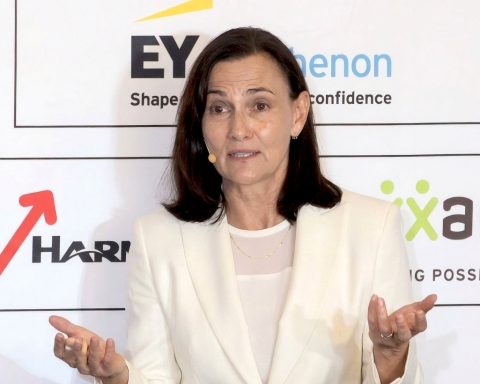


Some entrepreneurs build businesses by identifying a gap in the market. Others help build the technology that allows an entire industry to operate more effectively. Felix Ike belongs to the latter group. As co-founder and chief technology officer of Moniepoint, he has helped develop the financial infrastructure behind a company that has become an important part of Nigeria’s digital payments and business banking landscape.
His story is also a reminder that entrepreneurship is not always about being the most visible person in the room. While Moniepoint’s Group CEO, Tosin Eniolorunda, often represents the company publicly, Ike’s contribution has been closely connected to the technology that makes its services work. Together, they have built a business around a practical challenge: making financial services more accessible and dependable for African businesses.
Key Takeaways
- Felix Ike co-founded Moniepoint with Tosin Eniolorunda in 2015, initially building technology solutions for financial institutions.
- His background in software engineering and his leadership as CTO have been central to developing the company’s technology infrastructure.
- Moniepoint’s transition from banking technology services to direct financial products for businesses became a defining moment in its development.
- The company’s growth illustrates how solving practical infrastructure problems can create opportunities in markets underserved by traditional financial services.
- Ike’s journey highlights the importance of technical leadership, operational reliability, and long-term thinking when building a financial technology company.
From Software Engineering to Entrepreneurship
Felix Ike’s professional journey began in software engineering. He studied Computer Science at the University of Lagos, where he graduated with first-class honours in 2013. His education provided a technical foundation for a career in an industry where software increasingly determines how financial institutions deliver their services.
Before becoming an entrepreneur, Felix Ike worked at Interswitch, one of Nigeria’s established financial technology companies. His experience there exposed him to the practical demands of building and maintaining technology used in financial transactions. Payments infrastructure is a particularly demanding area of software engineering. Systems must process transactions accurately, protect sensitive information, remain available, and perform consistently as usage increases.
This experience became valuable when Ike decided to take a different professional path. In 2015, he joined forces with Tosin Eniolorunda to establish TeamApt, the company that would eventually develop into Moniepoint.
The decision meant moving from working within an established technology business to building one. Rather than simply developing software for an employer, Ike would now help create the systems, teams, and technical capabilities of a company of his own.
The Early Business: Building Technology for Banks
TeamApt did not begin as the merchant banking platform that many people associate with Moniepoint today. Its initial business focused on developing technology solutions for banks and other financial institutions.
This was a commercially important starting point. Financial institutions needed better software to automate processes, improve customer experiences, and make their services more efficient. TeamApt developed products to address these needs, building relationships with established players in Nigeria’s banking sector.
The business gained considerable reach. According to Moniepoint’s account of its history, its early financial products were deployed across 95% of Nigerian banks and improved services for more than 10 million customers.
For Ike, this stage of the company’s development was about more than securing clients. It offered an opportunity to understand how financial systems operated in practice, including the technical requirements of payment processing and the operational challenges faced by financial institutions.
That knowledge would later help the company approach a different market. Having worked with banks and developed financial technology for them, TeamApt had a clearer understanding of the infrastructure required to deliver financial services. It could use that experience to address the needs of customers who were not being served as effectively by conventional banking channels.
The Pivot That Changed the Company’s Direction
In 2019, TeamApt began moving beyond providing technology to banks and launched Moniepoint and Monnify. This was one of the most important developments in the company’s history.
The shift reflected an opportunity to serve businesses and individuals more directly. Many small businesses needed dependable ways to receive payments, move money, and manage their finances. Access to banking services did not always translate into a reliable everyday experience, particularly for people and businesses operating outside the country’s main commercial centres.
Moniepoint initially addressed this challenge through a network of cash-in and cash-out agents. These agents helped customers conduct digital transactions in places where access to conventional banking infrastructure was limited. Monnify, meanwhile, provided virtual accounts and payment solutions that helped businesses collect money from their customers.
The move represented a change in the company’s relationship with the financial services market. Instead of concentrating primarily on supplying technology to financial institutions, it was now building products for the businesses and individuals who depended on those institutions.
For Ike, this transition increased the technical demands of the business. A platform serving banks has to meet demanding operational standards, but a consumer-facing payments platform must also support a large and diverse user base, often with different devices, connectivity conditions, and transaction patterns.
Reliability became especially important. A failed payment can disrupt a customer’s day, while a business that cannot receive money may lose a sale. In financial technology, technical performance is directly connected to customer trust.
Building the Infrastructure Behind Moniepoint
As Moniepoint expanded, its technology requirements grew with it. The company moved into merchant payments, agency banking, business banking, and other financial services. Each new product introduced additional demands on the underlying systems.
Ike’s role as CTO placed him at the centre of this technical development. His responsibilities have included helping build the architecture and infrastructure that support the company’s financial products.
One of the major challenges in this type of business is scalability. A platform may function effectively when it serves a relatively small number of customers, but its infrastructure must evolve as transaction volumes and customer expectations increase. Systems must be designed to handle growth without compromising speed, security, or availability.
Moniepoint’s work with Google Cloud provides an example of how the company approached this challenge. In a published customer case study, Ike explained that the company needed infrastructure that was reliable, mature, affordable, and easy to use. Cloud technology helped it develop systems that could grow alongside the business without placing unnecessary pressure on its resources.
The company also faced regulatory considerations. Financial services providers cannot necessarily move every part of their infrastructure into the cloud. Moniepoint had to balance cloud-based scalability with requirements that called for certain systems to remain under its direct control.
These decisions illustrate the less visible side of fintech entrepreneurship. A financial platform is not built simply by launching an application or offering an attractive user interface. It requires infrastructure, security, compliance, engineering discipline, and the ability to maintain services under demanding conditions.
Expanding From Payments Into Business Banking
Moniepoint’s development continued as the company expanded its focus from payments to the broader financial needs of small and medium-sized businesses.
In 2022, the company received a banking licence and began offering banking services to businesses. This was a significant step because it allowed Moniepoint to provide more than payment acceptance. It could increasingly position itself as a financial partner for merchants and entrepreneurs.
In 2023, it introduced personal banking services, extending its infrastructure to individuals and employees connected to its business customers.
The broader strategy was to bring multiple financial services together. Businesses could use Moniepoint for payments and banking while gaining access to additional tools, including credit and business management services. Over time, the platform expanded its offering to include cross-border payments and other financial products.
This evolution also changed the scale of the technical challenge. Supporting a payments product is one thing; maintaining an integrated financial platform is another. Different services must work together, customer information must be handled securely, and transactions must remain dependable across the wider system.
The company’s growth suggests that its investment in technology was not simply a back-office consideration. It became part of the value proposition offered to customers.
From Nigerian Fintech to an International Business
Moniepoint’s expansion attracted growing attention from international investors and the wider financial technology industry.
In 2024, the company achieved unicorn status following its Series C funding activity. In October 2025, it announced the successful completion of a further Series C round, raising more than $200 million in equity financing. The round was led by Development Partners International, with participation from investors including LeapFrog Investments, Google Africa Investment Fund, Visa, and the International Finance Corporation.
The funding reflected the company’s ambition to expand its financial services and reach additional markets. It also provided external recognition of the business model developed by its founders and their team.
By 2026, Moniepoint reported that its platform had grown to serve more than 20 million businesses and individuals, with annual digital payment transaction value exceeding $250 billion. These are company-reported figures, but they illustrate the scale of the infrastructure that Ike and the engineering organization have helped build.
The company has also looked beyond Nigeria. Its international ambitions include services for the African diaspora and the development of financial connections between African markets and the rest of the world.
For Ike, international growth brings another set of engineering considerations. Financial products operating across borders must account for different regulatory environments, payment systems, currencies, and customer expectations. The technology has to accommodate these differences without losing the reliability that customers expect.
Recognition Beyond the Company
In September 2026, TIME included Ike in its inaugural Executives of the Year: Tech and Data list. He was the only African executive named among the 50 technology and data leaders recognized in the inaugural selection.
The recognition was notable because it placed attention on the engineering leadership behind an African-built financial platform. Discussions about successful fintech companies often focus on fundraising, valuations, customer numbers, and market expansion. Ike’s recognition highlighted another important dimension: the technical systems required to support a business operating at significant scale.
It also reflects a broader development in the technology industry. Companies founded in emerging markets are increasingly building infrastructure that serves large domestic populations and has the potential to compete internationally. Their achievements are not limited to adapting products created elsewhere. They are developing systems around the specific needs and operating conditions of their markets.
Ike’s work at Moniepoint provides one example of this shift.
What Entrepreneurs Can Learn From Felix Ike
1. Technical Expertise Can Become a Business Advantage
Ike’s software engineering background was not separate from his entrepreneurial journey. It became an important part of the company’s ability to identify and address problems in financial services.
Entrepreneurs do not necessarily need to be technical specialists, but understanding the core technology behind a business can help them make better decisions. In sectors where reliability and performance determine customer satisfaction, technical capability can become a meaningful competitive advantage.
2. Start With a Problem Customers Actually Experience
Moniepoint’s evolution was shaped by practical challenges in the financial services market. The company initially helped banks improve their technology, then expanded into products that addressed the needs of businesses and individuals.
This progression illustrates the value of understanding how customers experience a problem rather than relying exclusively on assumptions about what the market needs. Businesses built around recurring, everyday challenges can create stronger reasons for customers to adopt and continue using their products.
3. A Business Model Can Evolve Without Abandoning Its Foundation
TeamApt’s transition into Moniepoint involved a substantial change in its customer base and product strategy. However, the company did not abandon its original capabilities. Its experience building financial technology for banks became a foundation for serving merchants and businesses directly.
Entrepreneurs can learn from this distinction. A pivot does not always require starting from zero. Sometimes, the better opportunity is to apply existing knowledge and capabilities to a market with a more direct or valuable customer need.
4. Reliability Is Part of the Product
In financial technology, customers are not simply purchasing access to software. They are depending on the system to handle their money and support their daily operations.
Ike’s emphasis on reliable infrastructure reflects a lesson that applies well beyond fintech. Businesses should treat operational performance as part of the customer experience. A product that looks impressive but fails when customers need it is unlikely to earn lasting trust.
5. Strong Companies Are Built Through Complementary Leadership
Moniepoint’s founding story also demonstrates the importance of complementary skills. Eniolorunda has led the company’s overall business direction as Group CEO, while Ike has played a central role in its technology development as CTO.
A successful founding team does not need every member to perform the same function. It needs people who can take responsibility for different aspects of the business while working toward a shared objective. The ability to combine commercial judgment with technical execution can be especially valuable in complex industries.
Conclusion
Felix Ike’s entrepreneurial journey is not simply a story about building a successful fintech company. It is about the role of technology in making financial services more accessible, dependable, and useful for businesses.
Through TeamApt and its evolution into Moniepoint, Ike and his co-founder Tosin Eniolorunda built on their experience in financial technology to address a wider market. The company moved from supplying software to banks to providing payments, banking, and other financial tools directly to businesses and individuals.
Ike’s contribution has been closely connected to the systems behind that expansion. His story shows that entrepreneurship can take different forms. Some founders become known for their public leadership or business strategy, while others make their most significant contribution by building the technology and infrastructure that allow a company to deliver on its ambitions.
For aspiring entrepreneurs, his experience offers a useful reminder: a strong business does not always begin with a revolutionary idea. Sometimes, it begins with a deep understanding of an existing problem and the technical ability to solve it reliably.
FAQs
Who is Felix Ike?
Felix Ike is a Nigerian technology entrepreneur and the co-founder and chief technology officer of Moniepoint, a financial technology company serving businesses and individuals. He is known for his role in developing the technology infrastructure behind the company’s payments and banking services.
What company did Felix Ike co-found?
Ike co-founded TeamApt in 2015 with Tosin Eniolorunda. TeamApt initially developed technology solutions for financial institutions before expanding into direct financial services through Moniepoint and other products.
What is Felix Ike’s role at Moniepoint?
Felix Ike serves as Moniepoint’s co-founder and chief technology officer. His work focuses on the technology systems and infrastructure supporting the company’s financial products and services.
How did Moniepoint become successful?
Moniepoint grew by addressing practical financial challenges faced by Nigerian businesses and individuals. It evolved from a provider of banking technology into a platform offering merchant payments, agency banking, business banking, credit, and other financial services.
What can entrepreneurs learn from Felix Ike?
Entrepreneurs can learn from Ike’s emphasis on technical capability, customer problems, reliable infrastructure, and complementary leadership. His journey also demonstrates how an existing business can evolve by applying its core strengths to a broader market.
Sources:
- https://www.instagram.com/reel/DZCp_zXBc6E/
- https://en.wikipedia.org/wiki/Moniepoint_Inc.
- https://time.com/collection/executives-of-the-year-tech-data/2026/felix-ike/
- https://www.bloomberg.com/profile/person/25012290
- https://www.googlecloudpresscorner.com/2023-06-19-Moniepoint-Empowers-Nigerias-Underbanked-Businesses-With-Financial-Services-Enabled-by-Google-Cloud
- https://moniepoint.com/blog/redefining-payments-and-banking-in-nigeria-the-moniepoint-story