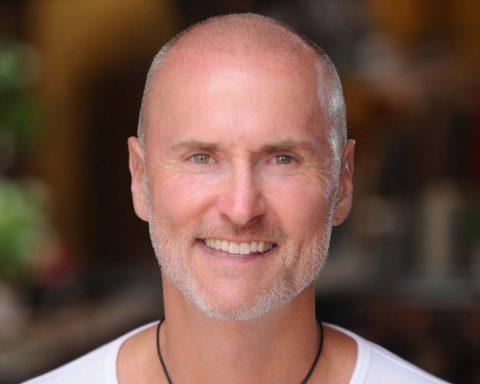



Some entrepreneurs build companies by identifying what customers want. Others go further, building businesses around what they believe the marketplace could become. John Mackey belongs to the second group, transforming a small natural-foods store in Austin into Whole Foods Market while challenging conventional ideas about capitalism, corporate culture, and stakeholder value.
His career offers a distinctive leadership lesson: a business can pursue financial success while also creating value for employees, customers, suppliers, communities, and the environment.
Key Takeaways
- Purpose can create competitive advantage. Businesses with a clear purpose can differentiate themselves while building stronger relationships with customers and employees.
- Stakeholder value matters. Long-term success can be strengthened when leaders create value for employees, customers, suppliers, communities, investors, and the environment.
- Empowered employees perform differently. Giving people autonomy, responsibility, and information can encourage stronger engagement and better decision-making.
- Idealism needs execution. Mission-driven companies still require financial discipline, operational excellence, and a sustainable business model.
- Great leaders reinvent themselves. Mackey’s transition from Whole Foods to Love.Life shows how leaders can carry their values into entirely new ventures.
The Seed of Conscious Capitalism
When John Mackey opened a small natural-foods store in Austin in 1978, there was little reason to believe the experiment would eventually become one of America’s most recognizable retail brands.
Mackey was just 25, had not completed a college degree, and had borrowed money from family and friends to launch SaferWay with his then-girlfriend Renee Lawson Hardy. The store was unconventional, the founders were inexperienced, and the natural-foods market was still a niche.
Yet Mackey had something more important than a conventional business plan: a strong belief that commerce could be both profitable and purposeful.
Over the next four decades, he helped build Whole Foods Market into a national and international grocery chain with hundreds of stores and more than $20 billion in annual sales before its $13.7 billion acquisition by Amazon in 2017.
But Mackey’s most enduring contribution may not be the company itself. Through the philosophy of Conscious Capitalism, he became one of the most prominent advocates for the idea that companies should create value for all stakeholders rather than treating shareholder returns as their only responsibility.
His leadership journey demonstrates that a powerful business philosophy can become a competitive advantage when it is consistently translated into everyday decisions.
Start With a Belief Bigger Than the Business
Mackey’s entrepreneurial journey began with a belief that people could benefit from better access to natural and healthier foods.
In 1978, he and Hardy opened SaferWay, a small natural-foods store and café in Austin. The founders even lived above the store, reflecting the limited resources behind the venture.
Two years later, SaferWay merged with Clarksville Natural Grocery, creating the first Whole Foods Market.
The company did not attempt to remain a tiny specialty retailer. Instead, Mackey gradually expanded the concept, acquiring regional natural-food chains and bringing natural and organic products to a much broader audience.
This required balancing ideals with commercial reality.
Whole Foods eventually sold conventional products, including meat, beer, and wine, because Mackey understood that reaching mainstream consumers required making the concept accessible rather than preserving its countercultural origins.
The lesson: Purpose is most powerful when leaders understand how to translate their beliefs into products and experiences that customers actually want.
Build a Business Around Stakeholder Value
Mackey’s most influential leadership philosophy became known as Conscious Capitalism.
The concept challenges the traditional assumption that maximizing shareholder returns should be the central objective of every business decision.
Instead, Mackey argues that successful organizations should create value for multiple stakeholders: customers, employees, suppliers, investors, communities, and the environment.
This philosophy was not simply theoretical.
At Whole Foods, employees were called “Team Members,” and the company developed programs designed to encourage participation and empowerment. Whole Foods was repeatedly recognized for its workplace culture and appeared on Fortune’s list of the 100 Best Companies to Work For.
Mackey also supported initiatives such as the Whole Planet Foundation, the Local Producer Loan Program, and animal-welfare standards through the Global Animal Partnership.
The approach reflected a broader principle: companies do not operate independently of society. Their long-term success depends on the health of the ecosystems surrounding them.
The lesson: Leaders can strengthen a company’s competitive position by recognizing that employees, customers, suppliers, and communities are sources of value rather than simply costs to manage.
Turn Employees Into Participants
One of Mackey’s distinctive approaches to leadership was his willingness to give employees a meaningful role in the organization.
Whole Foods developed a decentralized operating model in which individual teams enjoyed considerable autonomy. Employees could participate in decisions and were encouraged to take responsibility for store-level performance.
The philosophy was based on the idea that people are more motivated when they have ownership over their work.
This approach also challenged traditional management assumptions. Instead of believing that senior executives needed to make every important decision, Mackey believed knowledge was distributed throughout the organization.
The people closest to customers often understood their needs better than executives sitting at headquarters.
This created a culture in which leadership was not exclusively concentrated at the top.
The lesson: Empowerment works when leaders give employees both meaningful responsibility and the information necessary to make good decisions.
Balance Idealism With Commercial Discipline
Mackey’s career is particularly interesting because his philosophy never eliminated the need for financial discipline.
Whole Foods grew through a combination of organic expansion and strategic acquisitions, including regional chains such as Bread & Circus, Mrs. Gooch’s, and Fresh Fields.
The company went public in 1992 and continued expanding across the United States, Canada, and the United Kingdom.
Mackey understood that ideals alone could not sustain a large organization.
A company needs strong operations, customer loyalty, capital discipline, talented employees, and a compelling economic model.
Even some of his most symbolic decisions reflected this philosophy. In 2006, Mackey reduced his salary to $1 and donated stock options to foundations while supporting limits on executive compensation.
Whether every stakeholder agreed with his decisions was another matter, but the broader message was clear: leadership credibility can be strengthened when executives demonstrate that their personal incentives are connected to the organization’s values.
The lesson: Purpose does not replace business discipline; the strongest mission-driven companies combine both.
Protect Culture During Periods of Transformation
Perhaps the greatest leadership test of Mackey’s career came when Whole Foods itself became the target of strategic pressure.
By the 2010s, the company was facing increasing competition from conventional supermarkets, discount retailers, online commerce, and changing consumer expectations.
In 2017, Whole Foods agreed to be acquired by Amazon for $13.7 billion.
Mackey has said that he did not want to sell the company, but ultimately viewed Amazon as the best available option for protecting its future.
The decision illustrates an uncomfortable reality of leadership: sometimes preserving an organization’s mission requires accepting change rather than resisting it.
Mackey remained CEO until 2022, giving him the opportunity to help guide the company through its transition before eventually handing leadership to Jason Buechel.
The experience demonstrates that founders must eventually separate their personal identity from the organizations they create.
The lesson: Great leaders know when to fight for their vision and when to adapt their role so the organization can continue evolving.
Be Willing to Challenge Conventional Thinking
Mackey has never been a conventional corporate leader.
His intellectual journey moved from countercultural and socialist ideas toward free-market economics and libertarianism. He became an outspoken advocate of capitalism while simultaneously arguing that capitalism should be more conscious of its broader social responsibilities.
That combination made him difficult to categorize.
His public positions have also generated controversy. He has criticized labor unions, opposed aspects of government healthcare policy, questioned mainstream climate-change narratives, and attracted criticism for some of his political and personal associations.
The 2007 revelation that Mackey had anonymously posted on Yahoo Finance message boards under the name “Rahodeb,” praising Whole Foods and criticizing rival Wild Oats, was particularly embarrassing. An SEC investigation ultimately cleared him of legal violations, but the episode demonstrated the risks that come with highly visible leadership.
Mackey’s willingness to express unconventional opinions remains both a strength and a weakness.
It has helped distinguish his philosophy, but it has also created situations where his personal views became inseparable from the public perception of his company.
The lesson: Independent thinking can produce breakthrough ideas, but leaders must also recognize that unconventional positions carry reputational consequences.
Reinvent Yourself After the Exit
Retirement did not mean the end of Mackey’s entrepreneurial career.
After stepping down from Whole Foods in 2022, he turned his attention toward health, wellness, and longevity through Love.Life.
The venture reflects many of the ideas that shaped his earlier career: nutrition, healthy living, community, preventive care, and holistic well-being.
Love.Life combines elements such as functional medicine, nutrition, fitness, recovery, and food within a broader health-oriented experience.
In many ways, this represents a natural evolution of Mackey’s philosophy.
Whole Foods focused on helping people make healthier choices through food. Love.Life expands the concept into a more comprehensive approach to personal well-being.
His second act demonstrates that entrepreneurs do not have to spend their post-founder years simply managing their legacy.
They can use the knowledge accumulated from one chapter to pursue an entirely new challenge.
The lesson: The end of a successful career chapter can become the starting point for an even more personal expression of a leader’s values.
Leadership Lessons From John Mackey
Lead With Purpose
A compelling purpose can help organizations differentiate themselves, attract passionate employees, and build deeper relationships with customers.
Create Value for More Than Shareholders
Companies become more resilient when leaders recognize employees, customers, suppliers, communities, and investors as interconnected stakeholders.
Give People Ownership
Employees are more likely to contribute creatively when leaders trust them with meaningful responsibility rather than controlling every decision from the top.
Combine Ideals With Execution
A powerful mission means little without strong operations, financial discipline, customer value, and the ability to scale.
Protect Culture While Embracing Change
Leaders should preserve the principles that make an organization distinctive while remaining willing to change its structure, strategy, or even ownership when circumstances demand it.
Challenge Conventional Wisdom
Breakthrough businesses often emerge when entrepreneurs question assumptions that established competitors accept as inevitable.
Accept That Leadership Evolves
Founders eventually need to transition from building an organization to preparing it for its next generation of leadership.
Reinvention Keeps Leadership Relevant
Mackey’s move from Whole Foods to Love.Life demonstrates that decades of experience can provide the foundation for an entirely new entrepreneurial chapter.
Conclusion
John Mackey’s leadership story is ultimately about more than Whole Foods Market.
He took a countercultural idea and demonstrated that it could become a mainstream business. He challenged traditional assumptions about the purpose of corporations, experimented with employee empowerment, and helped popularize a form of stakeholder capitalism that continues to influence entrepreneurs and executives.
His record is not without contradictions or controversy. His outspoken positions have occasionally created reputational challenges, and some of his views have been sharply criticized. Yet those complexities make his leadership story more useful, not less.
Mackey demonstrates that leadership is not about having universally accepted opinions. It is about having a coherent philosophy, acting on it consistently, learning from its consequences, and remaining willing to evolve.
From a small store in Austin to one of America’s most influential retail companies – and eventually to a new venture focused on health and longevity – his career illustrates the power of building businesses around deeply held beliefs.
For today’s leaders, perhaps the biggest lesson is simple: a business can be a vehicle for profit, but it can also be a vehicle for purpose – and the most enduring leaders understand how to pursue both.
FAQs
What is John Mackey best known for?
John Mackey is best known as the co-founder and longtime CEO of Whole Foods Market, which he helped transform from a small Austin natural-foods store into a major international grocery retailer.
What is Conscious Capitalism?
Conscious Capitalism is a business philosophy associated with Mackey that argues companies should create value for multiple stakeholders rather than focusing exclusively on maximizing shareholder returns.
What was John Mackey’s leadership style?
Mackey’s leadership style combined entrepreneurial independence, employee empowerment, strong organizational purpose, and a willingness to challenge conventional business thinking.
Why did Amazon acquire Whole Foods?
Amazon acquired Whole Foods in 2017 for $13.7 billion as part of its expansion into physical retail and grocery, while Mackey remained CEO until 2022 to help guide the company through the transition.
What is John Mackey doing now?
After retiring from Whole Foods, Mackey became involved with Love.Life, a health and wellness venture focused on areas including nutrition, fitness, preventive care, recovery, and longevity.
Sources:
- https://en.wikipedia.org/wiki/John_Mackey_(businessman)
- https://www.bloomberg.com/news/articles/2017-06-16/amazon-to-acquire-whole-foods-in-13-7-billion-bet-on-groceries
- https://www.inkl.com/news/former-whole-foods-ceo-says-he-didn-t-want-to-sell-to-amazon-but-activists-threatened-to-take-over-his-board-fire-him-and-sell-the-company-anyway
- https://marketrealist.com/what-is-john-mackeys-net-worth/
- https://forward.com/news/342742/whole-foods-ceo-remains-loyal-to-marc-gafni-despite-abuse-claims/
Photo credit: Gage Skidmore / Wikimedia Commons / CC BY-SA 2.0 – cropped (link)